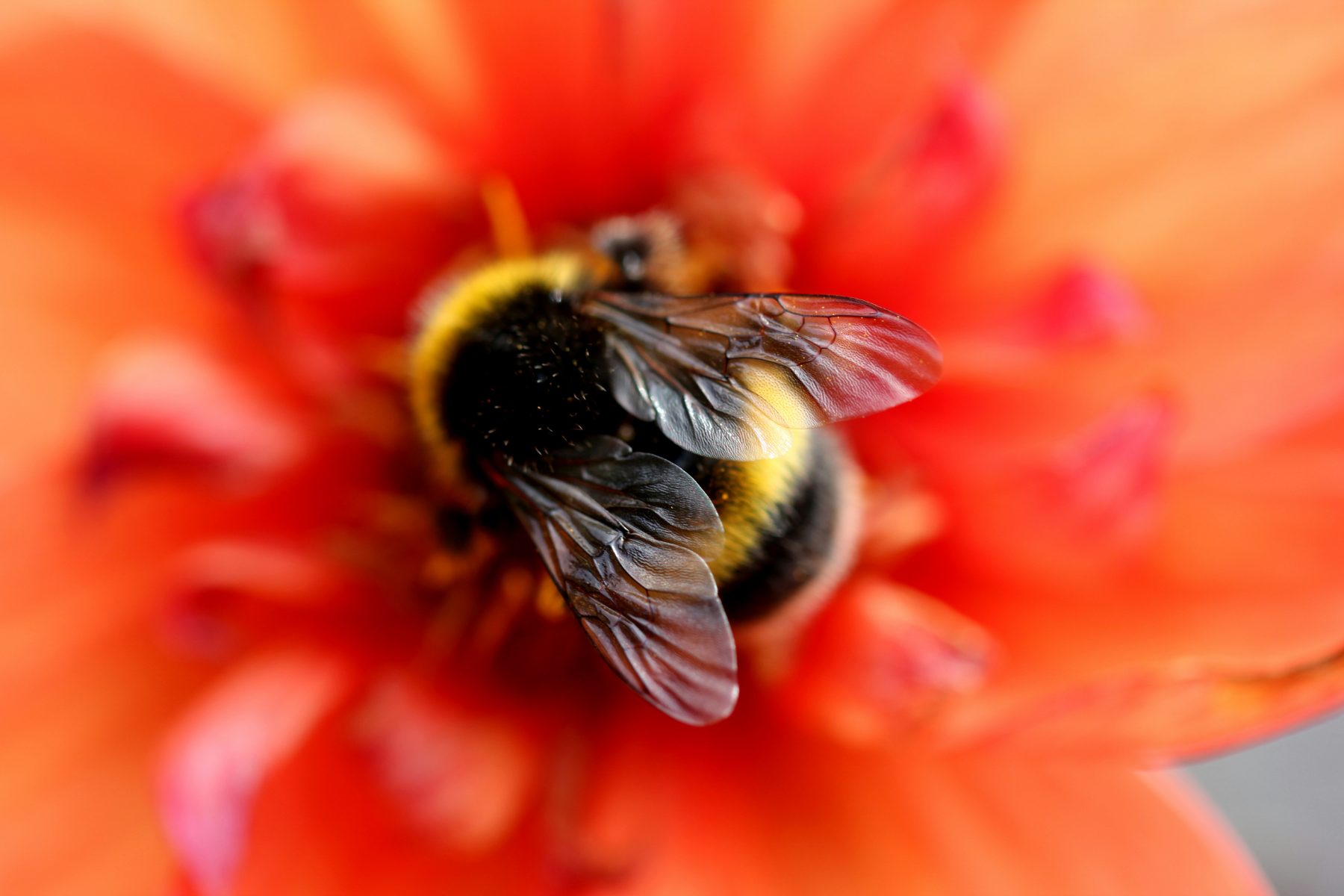
Most landscape briefs are written for people — shade, colour, screening, kerb appeal. Almost none are written for the bees, sunbirds and butterflies that keep the whole system alive. That is a missed opportunity, because designing for pollinators costs almost nothing extra, and it is fast becoming something developers are asked to demonstrate rather than something they volunteer.
Designing for bees, sunbirds and butterflies adds almost nothing to a planting budget and is fast becoming an expected part of Gulf landscape briefs — it mostly means choosing nectar-rich species and staggering flowering across the year.
- Pollinator provision is becoming a standard expectation on public and ESG-reported schemes.
- Stagger flowering so nectar is available across seasons, not in one burst.
- Native flowering shrubs and trees do most of the work at no premium.
Why it matters here
The Gulf has a surprising richness of native pollinators, and they are under the same pressure as everywhere else — habitat loss, fragmentation and sterile, over-manicured planting that offers nothing to feed on. A landscape can be lush and green and still be a desert to a bee if every plant in it is a non-flowering hybrid or a clipped hedge. Building the pollinator layer back in is one of the cheapest, highest-impact moves in sustainable design.
How to plant for it
- Sequence the flowering — choose species so something is in bloom in every season, not one spectacular spring flush followed by nothing.
- Favour nectar-rich natives and near-natives — Tecoma, Caesalpinia, Salvadora and flowering natives feed pollinators far better than showy sterile cultivars.
- Leave the single flowers single — many double-flowered ornamental hybrids have bred out the nectar and pollen entirely; the simpler bloom is usually the more useful one.
- Ease off the spraying — a pollinator scheme and a heavy pesticide regime cannot coexist; integrated, lighter-touch maintenance is part of the design, not an afterthought.
The commercial case is catching up with the ecological one. As biodiversity and nature-positive targets move from voluntary to expected across major UAE developments, a scheme that can show a genuine pollinator strategy is not just greener — it is easier to approve. Planting for the creatures most briefs forget turns out to be planting for the brief of the next decade.
Looking to source these plants?
Request a wholesale quote and our team responds within 24 hours.
Request a Quote →