Every fast-track brief wants the same thing at handover: a mature canopy, not a row of saplings. Semi-mature and specimen trees make that possible — but the physiology of a transplanted tree does not care about your handover date. Move a large tree and you strip away most of the root system it spent years building. What happens next determines whether that canopy is still standing in three years, or quietly failing behind a green facade.
A semi-mature tree loses most of its root system when it is lifted, so it arrives with a full canopy and a fraction of the roots needed to support it. That imbalance — not the move itself — is what determines whether the specimen survives its first two years.
- Transplanting removes the majority of the root mass while the canopy stays intact.
- Failures typically appear in year two or three, after the defects-liability period closes.
- Root-pruned, nursery-prepared stock plus staged aftercare materially improves survival.
The root math nobody puts in the brief
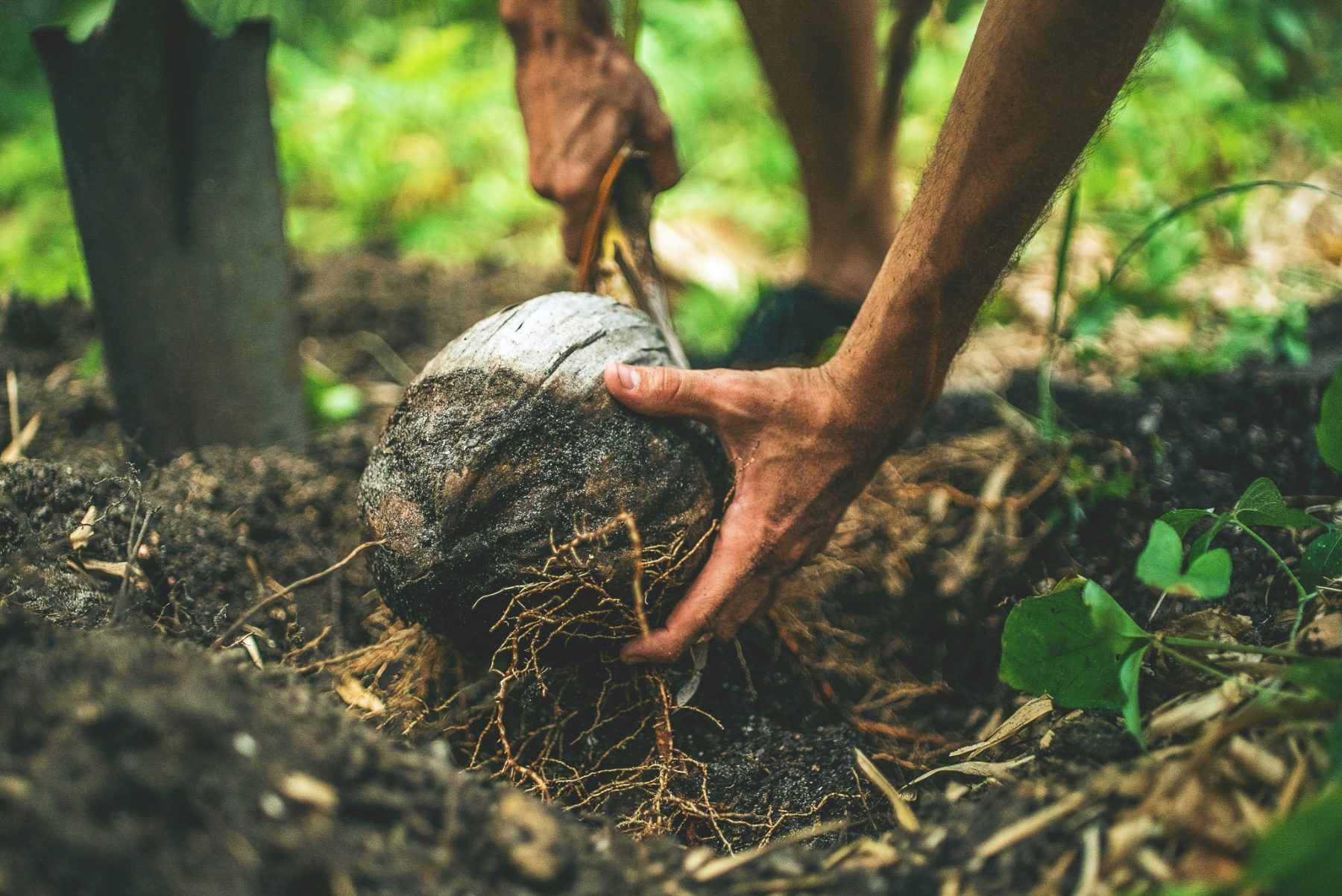
A field-grown tree's root spread typically extends well beyond its canopy line. A transplantable root ball, by contrast, is sized for what a crane or truck can move — which means a large-caliper tree can lose the great majority of the root system that was actually feeding it. The canopy comes along largely intact; the roots do not. That mismatch is the entire problem: a full crown demanding full water and nutrient flow, running on a fraction of the plumbing that used to supply it.
Why the failures show up after the warranty ends
This is the part that catches developers out. A newly transplanted specimen tree often looks fine for the first year — it is living on stored reserves and a generous irrigation schedule. The real test comes in the second and third growing seasons, once reserves are spent and the tree needs its new root system to be doing real work. Standard defects-liability periods run about twelve months. Root establishment for a large specimen, especially in Gulf heat, can reasonably take two to three growing seasons. That gap is exactly where "instant landscapes" quietly go wrong, well after everyone has moved on to the next project.
What actually improves the odds
- Root-ball sizing matched to trunk caliper, not to what's convenient to transport — undersized root balls are the single biggest predictor of later failure.
- Pre-transplant root pruning or box culture, giving the tree time to grow a denser, more compact root mass before the move rather than being cut cold.
- Canopy thinning at planting to rebalance water demand against the reduced root system — counterintuitive to a client who wants "full" trees on day one, but often the difference between establishment and decline.
- A staged irrigation ramp-down over two to three years, not a hard stop at handover, and avoiding transplant altogether during peak summer where the schedule allows it.
None of this is exotic horticulture — it's discipline that gets skipped under programme pressure. If a supplier can't tell you their root-ball ratio and aftercare schedule for a semi-mature specimen, that's the question to ask before it ships, not after it's browning on site.
Looking to source these plants?
Request a wholesale quote and our team responds within 24 hours.
Request a Quote →